i
Important informations

Laboratory

Cancer Genomics and Translational Research Laboratory

Overview

The Cancer Genomics and Translational Research Laboratory is dedicated to advancing precision oncology through cutting-edge research in liquid biopsies and cancer genomics, with a primary focus on breast cancer. Our mission centers on translating genomic insights into clinically actionable tools that improve early detection, treatment monitoring, and patient outcomes.

We integrate molecular biology, bioinformatics and clinically relevant patient derived models to understand tumor evolution, heterogeneity, and resistance mechanisms. Our interdisciplinary team works closely with clinicians, computational scientists, and biotechnology partners to bridge discovery science and patient care.

Meet the Team

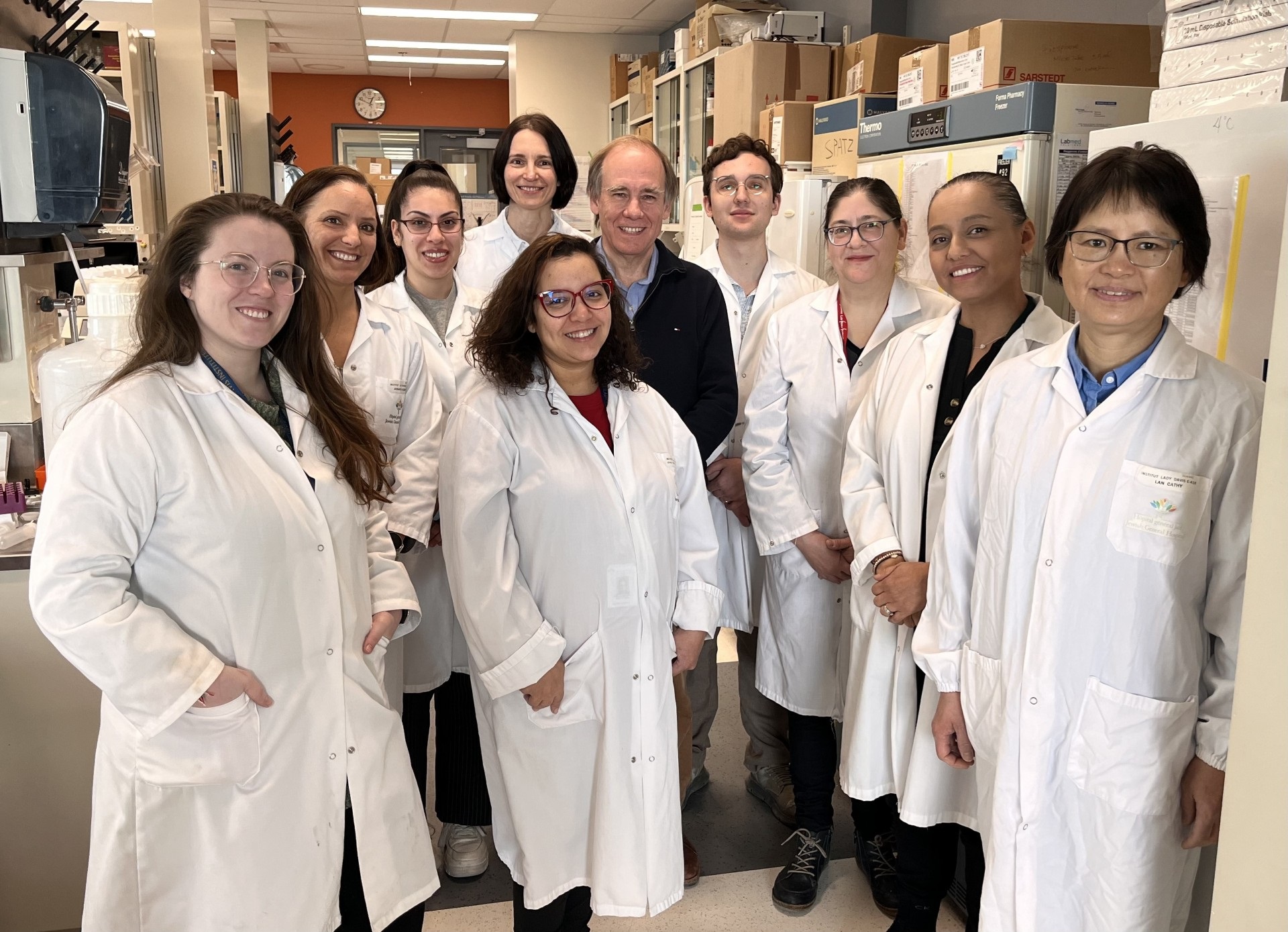
LUMIÈRE group picture 2026

Members of the CGTR Laboratory

Research

Our research focuses on the following areas:

1. Liquid Biopsies for Precision Oncology

Liquid biopsies, minimally invasive tests that detect tumor-derived material in blood and other body fluids, are at the core of our work.

Our lab works on the development of personalized Circulating Tumor DNA (ctDNA) assays to enable the sensitive detection and quantification of ctDNA for minimal residual disease detection and disease monitoring.

Our ctDNA assays are being used as biomarkers in clinical trials in breast cancer (Q-CROC-03, TRICIA, FRIDA and ESCAPE).

2. Cancer Genomics and Evolution

Decoding the genomic architecture of breast cancer is central to our mission. We apply high-throughput sequencing and integrative analyses to:

  • Identify driver mutations and structural variants across breast cancer subtypes.
  • Map tumor transcriptional evolution during the development of drug resistance.
  • Characterize genomic signatures associated with therapy resistance.

By combining tumor tissue genomics with liquid biopsy profiles, our lab dissects mechanisms of progression and recurrence at both the DNA and RNA levels.

3. Patient-Derived Models for Functional Precision Oncology

In parallel with our genomic and liquid biopsy research, the laboratory has extensive experience in the development and characterization of patient-derived xenograft (PDX) models and PDX-derived in vitro systems for functional drug testing.

These models faithfully recapitulate the genomic, transcriptomic, and phenotypic features of the original patient tumors, enabling robust evaluation of therapeutic vulnerabilities.

We leverage PDXs and PDX-derived cell lines to perform in vivo and in vitro drug response studies, investigate mechanisms of resistance, and validate genomics-driven therapeutic hypotheses.

Translational Research and Clinical Impact

Our research is strongly translational, with goals to move discoveries into clinical practice. Key translational initiatives include:

  • Biomarker discovery for therapy prediction and risk stratification.
  • Development of clinical assays that adhere to regulatory and diagnostic standards.
  • Partnerships with oncology clinics to integrate liquid biopsy tools in patient workflows.
  • Collaborative clinical trials to test genomic biomarkers as predictive tools for therapy selection.

Methodologies & Technologies

We leverage state-of-the-art platforms and approaches, including:

  • High quality and clinically annotated biobanked samples (tissue and blood) from close to 2000 breast cancer patients.
  • Next-generation sequencing (NGS) for comprehensive genomic profiling.
  • Digital PCR and Ultra-deep sequencing for high-sensitivity detection of rare variants.
  • PDX platform for PDX clinical trials to perform pre-clinical drug testing
  • Bioinformatics pipelines for integrative analysis of multi-omics data.

Collaborations and Impact

We maintain active collaborations across clinical, academic, and industry partners to accelerate research translation.

Our work contributes to:
  • Peer-reviewed publications in leading cancer research journals.
  • Open-access genomic datasets to support community-wide discovery.
  • Training and mentorship of the next generation of clinicians and scientists.
Titre

Contemporary research has uncovered a role for environmental copper in the development and progression of neurodegenerative diseases such as Alzheimer’s and Parkinson’s disease. Previous research implicated non-ceruloplasmin bound copper in the aggravation of neurodegenerative phenotypes. Our research explores the role of copper in ALS progression through monitoring of copper biomarkers and analyses of copper metabolism gene expression.

Lorem ipsum dolor sit amet consectetur adipisicing elit. Maxime mollitia, molestiae quas vel sint commodi repudiandae consequuntur voluptatum laborum numquam blanditiis harum quisquam eius sed odit fugiat iusto fuga praesentium optio, eaque rerum! Provident similique accusantium nemo autem. Veritatis obcaecati tenetur iure eius earum ut molestias architecto voluptate aliquam nihil, eveniet aliquid culpa officia aut! Impedit sit sunt quaerat, odit, tenetur error, harum nesciunt ipsum debitis quas aliquid. Reprehenderit, quia. Quo neque error repudiandae fuga? Ipsa laudantium molestias eos sapiente officiis modi at sunt excepturi expedita sint? Sed quibusdam recusandae alias error harum maxime adipisci amet laborum. Perspiciatis minima nesciunt dolorem! Officiis iure rerum voluptates a cumque velit quibusdam sed amet tempora. Sit laborum ab, eius fugit doloribus tenetur fugiat, temporibus enim commodi iusto libero magni deleniti quod quam consequuntur! 

Team

Dr. Mark Basik

Dr. Mark Basik

Principal Investigator

Dr. Basik is a surgical scientist at the Lady Davis Institute for Medical Research and an associate professor in the Departments of Surgery and Oncology at McGill University since 2003. He is the Head of the Cancer Genomics and Translational Research Laboratory and the Medical Director of the Inter-disciplinary Breast Cancer Team at the Segal cancer Center at the Jewish General Hospital. Dr. Basik’s laboratory is part of the FRQS Réseau de Cancer axe cancer du sein/ovaire, and as such actively participates in a province-wide breast tumor and plasma banking in breast cancer. His primary research interests are: the investigation of DNA changes in breast and colon cancer the study of mechanisms of resistance to different drugs used in breast and colon cancer, including chemotherapy and targeted therapies; the discovery and validation of tissue and plasma biomarkers predictive of response to treatment. Dr.Basik and his team are working in translational-cancer research, which aims at bridging basic and clinical research for the benefit of cancer patients. The strength of his laboratory is his easy access to clinical patient samples and use of cutting-edge technologies. 

Scientific Director

Adriana Aguilar

Adriana Aguilar, PhD

Scientific Director

I received a BSc in Molecular Biology & Genetics from McMaster University in 2017. I am currently studying how mutations of dyskerin, a telomerase-associated protein, affect its interaction with other proteins, subcellular localization, and telomerase RNA abundance.

Mark Basik 2

Luca Cavallone, PhD

ddPCR expert

I am a Belizean pursuing a PhD in Anatomy and Cell biology at McGill University in Montreal. I completed my BSc in Biochemistry and Cellular and Molecular Biology and my MSc in Biochemistry at Memorial University in Newfoundland Canada. My research interest involves increased understanding stem and cancer cell dynamics and redox biology to be applied to therapeutics for health span extension.

Research Assistants

Josiane Lafleur

Josiane Lafleur

Clinical Research Assistant

I am a Belizean pursuing a PhD in Anatomy and Cell biology at McGill University in Montreal. I completed my BSc in Biochemistry and Cellular and Molecular Biology and my MSc in Biochemistry at Memorial University in Newfoundland Canada. My research interest involves increased understanding stem and cancer cell dynamics and redox biology to be applied to therapeutics for health span extension.

Marguerite Buchanan

Marguerite Buchanan

Research Assistant

I am a Belizean pursuing a PhD in Anatomy and Cell biology at McGill University in Montreal. I completed my BSc in Biochemistry and Cellular and Molecular Biology and my MSc in Biochemistry at Memorial University in Newfoundland Canada. My research interest involves increased understanding stem and cancer cell dynamics and redox biology to be applied to therapeutics for health span extension.

Cathy Lan

Cathy Lan

Research Assistant

I am a Belizean pursuing a PhD in Anatomy and Cell biology at McGill University in Montreal. I completed my BSc in Biochemistry and Cellular and Molecular Biology and my MSc in Biochemistry at Memorial University in Newfoundland Canada. My research interest involves increased understanding stem and cancer cell dynamics and redox biology to be applied to therapeutics for health span extension.

Anna Klemantovich

Anna Klemantovich

Research Assistant

I am a Belizean pursuing a PhD in Anatomy and Cell biology at McGill University in Montreal. I completed my BSc in Biochemistry and Cellular and Molecular Biology and my MSc in Biochemistry at Memorial University in Newfoundland Canada. My research interest involves increased understanding stem and cancer cell dynamics and redox biology to be applied to therapeutics for health span extension.

Erika Dos Santos

Erika Dos Santos

Research Assistant

I am a Belizean pursuing a PhD in Anatomy and Cell biology at McGill University in Montreal. I completed my BSc in Biochemistry and Cellular and Molecular Biology and my MSc in Biochemistry at Memorial University in Newfoundland Canada. My research interest involves increased understanding stem and cancer cell dynamics and redox biology to be applied to therapeutics for health span extension.

PhD Trainees

Ben Ulmer

Ben Ulmer

Post-doctoral fellow

I come from Brazil, where I graduated in Biochemical Engineering at the Federal University of Paraná. I have more than four years of professional experience in manufacturing and quality assurance of reagents for molecular diagnostics. Now I’m interested in better understanding the role of the protein dyskerin and H/ACA ribonucleoprotein complexes in regulating telomere biology and cellular aging.

Talia Roseshter

Talia Roseshter

Post-doctoral fellow

I come from Brazil, where I graduated in Biochemical Engineering at the Federal University of Paraná. I have more than four years of professional experience in manufacturing and quality assurance of reagents for molecular diagnostics. Now I’m interested in better understanding the role of the protein dyskerin and H/ACA ribonucleoprotein complexes in regulating telomere biology and cellular aging.

Mark Basik 3

Alexandra Goudreau

Team Arsenic

Linda completed her BSc in Biology at the University of Waterloo. During her undergraduate degree, she worked as a co-op student in the lab of Dr. Paul Mains where her project used C. elegans to describe gene variants that cause drug resistance in parasitic nematodes. After graduating, she worked for a year in the lab of Dr. Ryan Yuen at SickKids in Toronto investigating short tandem repeat expansions using Nanopore and Sanger sequencing. She is now pursuing her MSc in the Autexier lab and is interested in how a region of telomerase, known as the insertions in fingers domain (IFD), is involved in its localization and activity at the telomeres. When not in lab, Linda enjoys listening to music or watching movies while she knits.

Mark Basik 2

Madelyn Abraham

Team Lymphoma

Madelyn is a PhD student in the department of Experimental Medicine. She uses mouse modelling to study Diffuse Large B Cell Lymphoma. In particular, she has found that mutations in the transcription factor STAT6 are enriched at disease relapse, and I study how this contributes to remodeling of the tumour microenvironment.

Mark Basik 2

Rowa Bakadlag

Team Tungsten

Rowa is a PhD candidate in the department of Experimental Medicine. She completed her BSc in Microbiology and Immunology in Saudi Arabia, then completed two MScs in Genetics and Parasitology at McGill University. Her work investigates tungsten toxicity focusing on SLC2A2 as a transporter and the effects on mature B lymphocytes.

MSc Students

Mark Basik 2

Ayse Nazli Zengin

Team Arsenic

Nazli Zengin is an MSc. student in the Department of Pharmacology. She has a background in pharmacology and environment. Her work currently focuses on elucidating how sex and diet modulate arsenic toxicity and its immunological and cardiovascular consequences.

Mark Basik 2

Andrew Little

Team Arsenic

Andrew is an MSc. student in the Department of Pharmacology who graduated from the B.Sc. program in Biochemistry at McGill in 2021. He works on a proteomics project centred around Arsenic 3-Methyltransferase and the question about whether it serves an additional function.

Mark Basik 2

Raymond Tu

Team Tungsten

Raymond is an MSc. Student in the Department of Pharmacology who completed his BSc. in Environmental Health Sciences from the UNC Chapel Hill as a as a Morehead-Cain Scholar. He received the McCall MacBain Scholarship in 2021. His project studies the mechanism of tungsten on mTORC1, a major regulator of cell growth and proliferation.

Mark Basik 2

Nikola Kukolj

Team Arsenic

Nikola is an incoming MSc Student who completed his undergraduate degree in
Microbiology and Immunology at McGill University. He is currently working on an NSERC
summer project that assesses the functional characterization of macrophages exposed to arsenic using murine bone marrow-derived macrophages.

Undergraduate Students

Mark Basik 2

Roni Juran

Team Vaping

Roni is a second-year BSc student in Chemistry at McGill. As an undergraduate student, she works on various projects across the lab, but is currently focused elucidating the correlation between nonalcoholic fatty liver disease and vaping.

Past team members

  • Isabelle Sirois, PhD
    Research Associate/Metabolism and proteomics
  • Urszula Krmzeien
    Clinical Research Assistant/PMT agent
  • Frederic Charbonneau
    Clinical research assistant/PMT agent
  • Emma Fowler
    Msc student
  • Yirui Gui, PhD
    Post-Doctoral Fellow

Titre

Contemporary research has uncovered a role for environmental copper in the development and progression of neurodegenerative diseases such as Alzheimer’s and Parkinson’s disease. Previous research implicated non-ceruloplasmin bound copper in the aggravation of neurodegenerative phenotypes. Our research explores the role of copper in ALS progression through monitoring of copper biomarkers and analyses of copper metabolism gene expression.

Lorem ipsum dolor sit amet consectetur adipisicing elit. Maxime mollitia, molestiae quas vel sint commodi repudiandae consequuntur voluptatum laborum numquam blanditiis harum quisquam eius sed odit fugiat iusto fuga praesentium optio, eaque rerum! Provident similique accusantium nemo autem. Veritatis obcaecati tenetur iure eius earum ut molestias architecto voluptate aliquam nihil, eveniet aliquid culpa officia aut! Impedit sit sunt quaerat, odit, tenetur error, harum nesciunt ipsum debitis quas aliquid. Reprehenderit, quia. Quo neque error repudiandae fuga? Ipsa laudantium molestias eos sapiente officiis modi at sunt excepturi expedita sint? Sed quibusdam recusandae alias error harum maxime adipisci amet laborum. Perspiciatis minima nesciunt dolorem! Officiis iure rerum voluptates a cumque velit quibusdam sed amet tempora. Sit laborum ab, eius fugit doloribus tenetur fugiat, temporibus enim commodi iusto libero magni deleniti quod quam consequuntur! 

Resources

Our laboratory possesses the equipment for the process of histology and histochemistry and has access to the LDI Cell Imaging Facility under the supervision of Dr Christian Young (confocal microscope and LSM800 Airyscan). RT-qPCR for the quantitation of RNA and microRNAs is carried out at the SEGAL Cancer Center and we have developed CrisprCas9 expertise for genomic edition. More traditional techniques are also present in our laboratory, immunoblotting, RTPCR, primary cell cultures… We possess two organ baths allowing measurements of bladder strip contractility (2 machines in total). We have developed several models of bladder dysfunction in rats (partial bladder obstruction) and mice (streptozotocin induced type 1 diabetes, TallyHo) and the animal quarters of the LDI provide support and expertise on animal handling and surgeries.

For prostate cancer research, we have access to immune-histochemistry CODEX apparatus and SOMAscan for sensitive proteomic analysis inside the LDI.

Titre

Contemporary research has uncovered a role for environmental copper in the development and progression of neurodegenerative diseases such as Alzheimer’s and Parkinson’s disease. Previous research implicated non-ceruloplasmin bound copper in the aggravation of neurodegenerative phenotypes. Our research explores the role of copper in ALS progression through monitoring of copper biomarkers and analyses of copper metabolism gene expression.

Lorem ipsum dolor sit amet consectetur adipisicing elit. Maxime mollitia, molestiae quas vel sint commodi repudiandae consequuntur voluptatum laborum numquam blanditiis harum quisquam eius sed odit fugiat iusto fuga praesentium optio, eaque rerum! Provident similique accusantium nemo autem. Veritatis obcaecati tenetur iure eius earum ut molestias architecto voluptate aliquam nihil, eveniet aliquid culpa officia aut! Impedit sit sunt quaerat, odit, tenetur error, harum nesciunt ipsum debitis quas aliquid. Reprehenderit, quia. Quo neque error repudiandae fuga? Ipsa laudantium molestias eos sapiente officiis modi at sunt excepturi expedita sint? Sed quibusdam recusandae alias error harum maxime adipisci amet laborum. Perspiciatis minima nesciunt dolorem! Officiis iure rerum voluptates a cumque velit quibusdam sed amet tempora. Sit laborum ab, eius fugit doloribus tenetur fugiat, temporibus enim commodi iusto libero magni deleniti quod quam consequuntur! 

Publications

  • Roseshter T, Klemantovich A, Lafleur J, Lan C, Cavallone L, Bozek K, Guay J, Elebute O, Jenna S, Ouellette R, McNamara S, Boileau JF, Pelmus M, Brackstone M, Pezo R, Ng T, Aguilar-Mahecha A, Basik M. Clinical Validation of Digital PCR-based ctDNA detection for risk stratification in residual triple negative breast cancer: TRICIA trial results. Clin Cancer Res. 2026 Jan 16;32(2):312-323. doi: 10.1158/1078-0432.
  • Capella MP, Fallah P, Basik M. Personalized circulating tumor DNA response to local radiotherapy in a patient with an early lobular breast cancer: A case report. Oncol Lett. 2024 Apr 25;27(6):282. doi: 10.3892/ol.2024.14415. PMID: 38736743; PMCID: PMC11082640.
  • Aguilar-Mahecha A, Lafleur J, Brousse S, Savichtcheva O, Holden KA, Faulkner N, McLennan G, Jensen TJ, Basik M. Early, On-Treatment Levels and Dynamic Changes of Genomic Instability in Circulating Tumor DNA Predict Response to Treatment and Outcome in Metastatic Breast Cancer Patients. Cancers (Basel). 2021 Mar 16;13(6):1331.
  • Gui Y, Aguilar-Mahecha A, Krzemien U, Hosein A, Buchanan M, Lafleur J, Pollak MN, Ferrario C, Basik M. Metastatic breast carcinoma-associated fibroblasts have enhanced pro-tumorigenic properties related to increased IGF2 expression. Clin Cancer Res. 2019 Dec 1;25(23):7229-7242. doi: 10.1158/1078-0432.CCR-19-1268. PMID:31515454.
  • Denkert C, Lambertini C, Fasching PA, Pogue-Geile KL, Mano MS, Untch M, Wolmark N, Huang CS, Loibl S, Mamounas EP, Geyer CE, Lucas PC, Boulet T, Song C, Lewis GD, Nowicka M, de Haas S, Basik M. Biomarker Data from the Phase III KATHERINE Study of Adjuvant T-DM1 versus Trastuzumab for Residual Invasive Disease after Neoadjuvant Therapy for HER2-Positive Breast Cancer. Clin Cancer Res. 2023 Apr 14;29(8):1569-1581.
  • Cavallone L, Aguilar-Mahecha A, Lafleur J, Brousse S, Aldamry M, Roseshter T, Lan C, Alirezaie N, Bareke E, Majewski J, Ferrario C, Hassan S, Discepola F, Seguin C, Mihalcioiu C, Marcus EA, Robidoux A, Roy JA, Pelmus M, Basik M. Prognostic and predictive value of circulating tumor DNA during neoadjuvant chemotherapy for triple negative breast cancer. Sci Rep. 2020 Sep 7;10(1):14704.
  • Sirois I, Aguilar-Mahecha A, Lafleur J, Fowler E, Vu V, Scriver M, Buchanan M, Chabot C, Ramanathan A, Balachandran B, Légaré S, Przybytkowski E, Lan C, Krzemien U, Cavallone L, Aleynikova O, Ferrario C, Guilbert MC, Benlimame N, Saad A, Alaoui-Jamali M, Saragovi HU, Josephy S, O’Flanagan C, Hursting SD, Richard VR, Zahedi RP, Borchers CH, Bareke E, Nabavi S, Tonellato P, Roy JA, Robidoux A, Marcus EA, Mihalcioiu C, Majewski J, Basik M. A Unique Morphological Phenotype in Chemoresistant Triple-Negative Breast Cancer Reveals Metabolic Reprogramming and PLIN4 Expression as a Molecular Vulnerability. Mol Cancer Res. 2019 Dec;17(12):2492-2507.
  • Viale G, Basik M, Niikura N, Tokunaga E, Brucker S, Penault-Llorca F, Hayashi N, Sohn J, Teixeira de Sousa R, Brufsky AM, O’Brien CS, Schmitt F, Higgins G, Varghese D, James GD, Moh A, Livingston A, de Giorgio-Miller V. Retrospective study to estimate the prevalence and describe the clinicopathological characteristics, treatments received, and outcomes of HER2-low breast cancer. ESMO Open. 2023 Aug;8(4):101615.
  • Aguilar-Mahecha A, Joseph S, Cavallone L, Buchanan M, Krzemien U, Batist G, Basik M. Precision Medicine Tools to Guide Therapy and Monitor Response to Treatment in a HER-2+ Gastric Cancer Patient: Case Report. Front Oncol. 2019 Aug 6;9:698.
  • Cavallone L, Al-Damry M, Lafleur J, Lan C, Gonzalez-Ginestet P, Aguilar-Mahecha A, Basik M. A study of pre-analytical variables and optimization of extraction method for circulating tumor DNA measurements by digital droplet PCR. Cancer Epidemiol Biomarkers Prev. 2019 Mar 1. doi: 10.1158/1055-9965.EPI-18-0586. PMID:30824523.

Collaborations

Uri Saragovi, McGill University, Montreal Canada

Indra Gupta, McGill University, Montreal Canada

Jeremy Burton, Western University, London Canada

Stephane Bolduc, Université Laval, Québec Canada

Lori Lerner, Boston University School of Medicine, Boston, USA

Gilles Karsenty, Aix-Marseille Université, Marseille France

Dr. Brandon Pearson, Columbia University, New York

Dr. John Wise, University of Louisville, Kentucky

News/Milestones

Dr. Wilson Miller, Lady Davis Institute, Montreal

Dr. Sonia del Rincon, Lady Davis Institute, Montreal

Dr. Carolyn Baglole, RI-MUHC, McGill University, Montreal

Dr. Jun Ding, RI-MUHC, McGill University, Montreal

Dr. Susan Gaskin, Dep’t of Chemical Engineering, McGill University, Montreal

Dr. Bernard Robaire, Dep’t of Pharmacology McGill University, Montreal

Dr. Brandon Pearson, Columbia University, New York

Dr. John Wise, University of Louisville, Kentucky

Lorem ipsum dolor sit amet consectetur adipisicing elit. Maxime mollitia, molestiae quas vel sint commodi repudiandae consequuntur voluptatum laborum numquam blanditiis harum quisquam eius sed odit fugiat iusto fuga praesentium optio, eaque rerum! Provident similique accusantium nemo autem. Veritatis obcaecati tenetur iure eius earum ut molestias architecto voluptate aliquam nihil, eveniet aliquid culpa officia aut! Impedit sit sunt quaerat, odit, tenetur error, harum nesciunt ipsum debitis quas aliquid. Reprehenderit, quia. Quo neque error repudiandae fuga? Ipsa laudantium molestias eos sapiente officiis modi at sunt excepturi expedita sint? Sed quibusdam recusandae alias error harum maxime adipisci amet laborum. Perspiciatis minima nesciunt dolorem! Officiis iure rerum voluptates a cumque velit quibusdam sed amet tempora. Sit laborum ab, eius fugit doloribus tenetur fugiat, temporibus enim commodi iusto libero magni deleniti quod quam consequuntur! 

  1. How iMALDI can improve clinical diagnostics. Popp, R., Basik, M., Spatz, A., Batist, G., Zahedi, R.P., Borchers, C.H., 2018. Analyst Clin. Chem. 64, 1271–1272. 143, 2197–2203.
  2. Immuno-MALDI-TOF-MS in the Clinic. Zahedi, R.P., Parker, C.E., Borchers, C.H., 2018.

Awards

Dr. Lysanne Campeau

Dr. Lysanne Campeau

Career Awards

2023

  • Kathryn Rolph Award: In recognition of her outstanding achievements and leadership, contributing to the advancement of the Department of Surgery, Faculty of Medicine, McGill University

2019

  • Young Urologist of the year Award: American Urological Association – Young Urologist Committee

Jian Qin

  • FRQS Doctoral Award, McGill University Faculty of Medicine Internal Studentship

Deanna MacNeil

  • CIHR CGS-M, CIHR Doctoral Award, Cole Foundation Studentship

Tsz Wai (Josephine) Chu 

  • FRQS Doctoral Award, McGill University Faculty of Medicine Internal Studentship
  • CIHR McGill Cancer Center Consortium/McGill Integrated Cancer Research Training Program Studentship

Johanna Mancini

  • FRQS doctoral award, Cole Foundation Studentship

Yasmin D’Souza

  • CIHR Doctoral Award

May Shawi

  • CIHR Doctoral Award, Cole Foundation Studentship

Marie Eve Brault

  • FRQS Doctoral Award, Cole Foundation Studentship

Johans Fakhoury

  • McGill University Faculty of Medicine Internal Studentship

  • CIHR McGill Cancer Center Consortium/McGill Integrated Cancer Research Training Program Studentship

Maria Antonietta Cerone

  • US Army Department of Defense Breast Cancer Research Program Award

Tara Moriarty

  • CIHR Doctoral Award

Sylvain Huard

  • McGill University Faculty of Medicine Internal Studentship

François Bachand

  • CIHR Doctoral Award

Distinctions and Research Awards

2022

  • Best ePoster at the Société Internationale d’Urolgie 42nd Congress November 9-13 2022

2022

  • Best abstract in the Basic Science category at the 7th Annual Multidisciplinary Benign Urology Research Symposium April 30, 2022

2022

  • Best basic science abstract – Society of Urodynamics, Female Pelvic Medicine and Urogenital Reconstruction Annual meeting Annual Meeting 2022

2021

  • Best abstract in the Translational Science category at the 6th Annual Multidisciplinary Benign Urology Research Symposium April 29, 2021

2020

  • Best Reviewer in 2019 Award, Journal of Urology

2018

  • Spinal Cord Best Review Paper Award for papers published in 2017, Spinal Cord (Nature Journal)

2018

  • American Urological Association 2018 Annual Meeting: Best Poster

2017

  • International Continence Society Annual Meeting 2017: Best Abstract in category

2017

  • Honor, Early Career Investigators Showcase Speaker, American Urological Association 2017 Annual Meeting

Johans Fakhoury

  • McGill University Faculty of Medicine Internal Studentship

  • CIHR McGill Cancer Center Consortium/McGill Integrated Cancer Research Training Program Studentship

Undergraduate students

Hannah Chui

  • NSERC USRA recipientCIHR CGS-M Award

Dominique Rinfret

  • NSERC USRA recipient

Michelle Shen

  • NSERC USRA recipient

Ricky Kwan

  • McGill University Faculty of Medicine Internal Studentship

  • Lady Davis Institute for Medical Research/Toronto Dominion Bank Studentship

Yasmin D’Souza

  • CIHR Doctoral Award

May Shawi

  • CIHR Doctoral Award, Cole Foundation Studentship

Marie Eve Brault

  • FRQS Doctoral Award, Cole Foundation Studentship

Johans Fakhoury

  • McGill University Faculty of Medicine Internal Studentship

  • CIHR McGill Cancer Center Consortium/McGill Integrated Cancer Research Training Program Studentship

Events

Dr. Wilson Miller, Lady Davis Institute, Montreal

Dr. Sonia del Rincon, Lady Davis Institute, Montreal

Dr. Carolyn Baglole, RI-MUHC, McGill University, Montreal

Dr. Jun Ding, RI-MUHC, McGill University, Montreal

Dr. Susan Gaskin, Dep’t of Chemical Engineering, McGill University, Montreal

Dr. Bernard Robaire, Dep’t of Pharmacology McGill University, Montreal

Dr. Brandon Pearson, Columbia University, New York

Dr. John Wise, University of Louisville, Kentucky

Lorem ipsum dolor sit amet consectetur adipisicing elit. Maxime mollitia, molestiae quas vel sint commodi repudiandae consequuntur voluptatum laborum numquam blanditiis harum quisquam eius sed odit fugiat iusto fuga praesentium optio, eaque rerum! Provident similique accusantium nemo autem. Veritatis obcaecati tenetur iure eius earum ut molestias architecto voluptate aliquam nihil, eveniet aliquid culpa officia aut! Impedit sit sunt quaerat, odit, tenetur error, harum nesciunt ipsum debitis quas aliquid. Reprehenderit, quia. Quo neque error repudiandae fuga? Ipsa laudantium molestias eos sapiente officiis modi at sunt excepturi expedita sint? Sed quibusdam recusandae alias error harum maxime adipisci amet laborum. Perspiciatis minima nesciunt dolorem! Officiis iure rerum voluptates a cumque velit quibusdam sed amet tempora. Sit laborum ab, eius fugit doloribus tenetur fugiat, temporibus enim commodi iusto libero magni deleniti quod quam consequuntur! 

  1. How iMALDI can improve clinical diagnostics. Popp, R., Basik, M., Spatz, A., Batist, G., Zahedi, R.P., Borchers, C.H., 2018. Analyst Clin. Chem. 64, 1271–1272. 143, 2197–2203.
  2. Immuno-MALDI-TOF-MS in the Clinic. Zahedi, R.P., Parker, C.E., Borchers, C.H., 2018.

Support

Dr. Wilson Miller, Lady Davis Institute, Montreal

Dr. Sonia del Rincon, Lady Davis Institute, Montreal

Dr. Carolyn Baglole, RI-MUHC, McGill University, Montreal

Dr. Jun Ding, RI-MUHC, McGill University, Montreal

Dr. Susan Gaskin, Dep’t of Chemical Engineering, McGill University, Montreal

Dr. Bernard Robaire, Dep’t of Pharmacology McGill University, Montreal

Dr. Brandon Pearson, Columbia University, New York

Dr. John Wise, University of Louisville, Kentucky

Current research activities have received support from the following sources:

  • Canadian Institutes for Health Research
  • Cancer Research Society
  • Quebec Breast Cancer Foundation
  • Genome Quebec
  • Canadian Cancer Society
  • Fonds de la Recherche en Santé du Québec
  • Reseau Recherche Cancer
  • CQDM
  • MCTRC
  • Cure Foundation
  • Jewish General Hospital Foundation
  • The weekend to end Cancer

Contact

Lady Davis Institute for Medical Research, Jewish General Hospital

3755, Côte Ste-Catherine Road
Montreal, Quebec H3T 1E2

Location: E-421

LDI logo
Privacy Overview

This website uses cookies so that we can provide you with the best user experience possible. Cookie information is stored in your browser and performs functions such as recognising you when you return to our website and helping our team to understand which sections of the website you find most interesting and useful.